In Eastern Turkey

I saw our group off at the Istanbul airport early yesterday morning. Elizabeth informs me that everyone made it to New York safely. A few hours later I left for Van in Eastern Turkey with Leon Mauldin, David Padfield, and Gene Taylor. We will be visiting numerous OT sites in the east. In Van we picked up a rental vehicle and headed for Dogubayazit. This is the small town closest to Mount Ararat. This entire area of Turkey is the ancient Urartu, the land of Ararat. The Bible tells us that the ark landed in the mountains of Ararat (Genesis 8:4). The specific peak is not mentioned and there are several contenders for the mountain of the Bible. Mount Ararat is the one best known.

On the way north from Van we stopped at the Muradiye falls. The terrain you see in the photos if typical of that area of Ararat. Here is a photo of the falls.
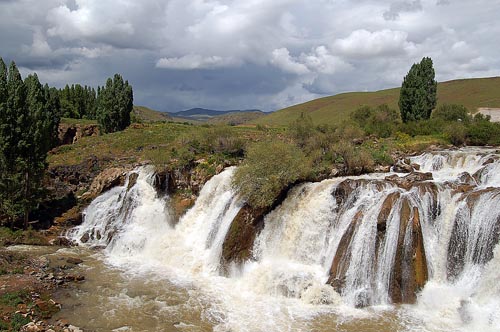
Muradiye Falls in Eastern Turkey. Photo by Ferrell Jenkins.

My only other trip to this area was in 1995, so I am excited about the possibility of getting hi-res digital photos of the area.

Between Muradiye and Dogubeyazit we reached an elevation of about 8,000 feet, saw lots of snow still on the mountains, and encountered a little rain. There were shepherds with sheep all through this area. When we arrived our hotel facing Mount Ararat the mountain was totally covered in dark clouds. Within two hours we were able to go out and made wonderful photos of the mountains. We even saw a rainbow. No kidding! The photo below iS of Greater Ararat. We never saw Lesser Ararat completely cloudless. We drove to the check point at the border with Iran. I was surprised to find about 3 tours groups at the hotel. The last time I was there my companions and I were the only ones in the hotel. Here is one of the photos I made yesterday.
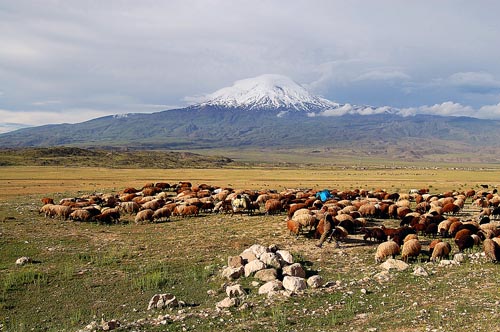
Mount Ararat in Eastern Turkey near the Iranian border. Photo by Ferrell Jenkins.

 This morning we made more photos and visited a few places nearby.  In the afternoon we drove back to Van. We went to the museum but it was closed for restoration. We did make photos of some items in the courtyard. We also visited the Rock in Van. We are now at our hotel on the shore of Lake Van.
Wonderful Day in Istanbul. The tour is completed.

We had a great day visiting the sites of Istanbul. The city is important in secular and church history. A few of us spent almost the entire day in the marvelous Archaeological Museum. I made more than 500 hi-res digital photos today. Tonight at dinner we celebrated a birthday and an anniversary. Not enough time to post any photos, but will plan to do that later.

As the group returns home I will be departing for Eastern Turkey with three friends. We will spend a week in that part visiting some of the important Old Testament sights.

We probably will not have Internet access tomorrow night from Mount Ararat, but we may have access the following night. I will post some notes whenever possible. Keep checking back.

Arrival in Istanbul on Saturday

Our flight from Antalya to Istanbul was delayed by a little over an hour. We felt right at home! Istanbul was formerly known as Byzantium and Constantinople. This is where Europe meets Asia. We enjoyed a boat ride along the Bosphorus, vital waterway linking the Black Sea to the Mediterranean Sea. The Asian side was known as Bythinia in Roman times. Peter addressed his epistles to the saints in various parts of modern Turkey (1 Peter 1:1). We made a short visit to the Grand Bazaar. This bazaar is made up of 4,000 little shops. The prices are not that great and one must be able to bargain or else be ripped off.

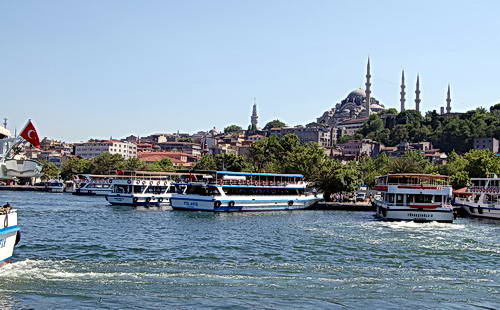
The Golden Horn in Istanbul. Photo by Ferrell Jenkins.

This photo shows the Golden Horn in Istanbul, Turkey. Here is located the Suleymaniye Mosque, the Hagai Sophia, and Topkapi Palace.

First time here?

If you are visiting the blog for the first time be sure that you click on May 2007 (to the right) or Previous Entries (at the bottom of the page) to see the early part of the tour.

Perga and Attalia in Pamphylia

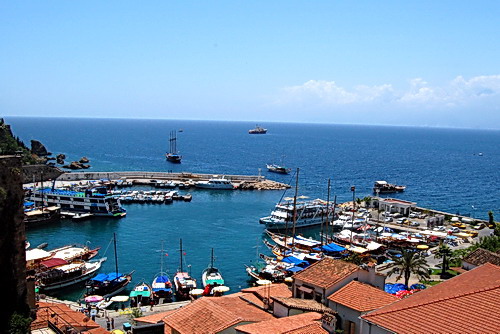
Friday we visited the historic ruins of ancient Pamphylia: Antalya (biblical Attalia, Acts 14:25) and Perge. Antalya is the modern name for Attalia which served as the port of entry from Egypt and Syria to the interior of Asia. From here Paul sailed back to Antioch (Acts 14:25). Our visit included the harbor, and Hadrian’s Gate, The photo below is of the harbor in Antalya (biblical Attalia).

The Harbor of Antalya, Turkey. This was the city of Attalia in New Testament times. Photo by Ferrell Jenkins.

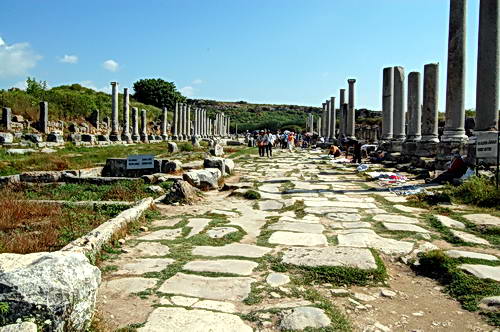
We enjoyed the visit to Perga very much. There are impressive Hellenistic and Roman ruins. Most of the Roman structures date to the second century A.D. This is where John Mark turned back from the work (Acts 13:13-14; 15:37-39). On his return from the first journey, Paul spent some time preaching here (Acts 14:25).

The Roman City of Perga in Pamphylia. Photo by Ferrell Jenkins.

The museum in Antalya is one of the nicest regional museums I have visited. Many of the artifacts, especially the statuary, are from the second century Roman city of Perga. Here is a photo of an Imperial Priest. A knowledge of the Roman Cult is important when one begins to study the book of Revelation. These were the men who gave the certificates to those who had worshiped the Emperor.

Second century Roman Imperial Priest in the Antalya, Turkey, Museum. Photo by Ferrell Jenkins.

Antalya is a popular Mediterranean resort town with many nice hotels. I would have enjoyed a few days just to relax. Next is Istanbul.

Iconium, Pisidian Antioch, Attalia

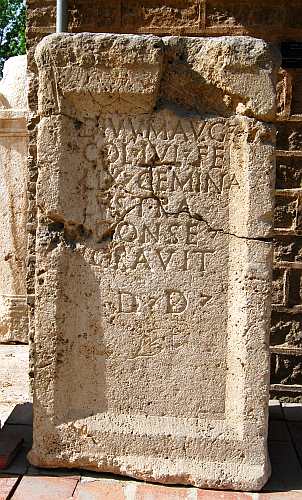
Konya is the site of ancient Iconium, one of the oldest cities of Anatolia. Paul and Barnabas encountered much opposition in this city (Acts 14:1-6). Konya is best known today as the home of the Whirling Dervishes. We made a brief visit of Konya including the Archaeological Museum. The museum contains three inscribed stone monuments of interest. One mentions Derbe, another one mentions Iconium, and the third one mentions Lystra (photo below). No ruins of Iconium have been excavated. The legendary second century Acts of Paul, telling about a convert by the name of Thecla, takes it setting in Iconium.

Lystra Inscription. Photo by Ferrell Jenkins.

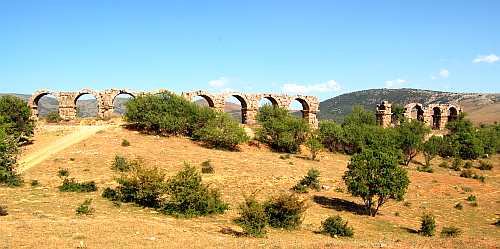
We continued west to Yalvac for a visit to the site of Pisidian Antioch. Yalvac is located on a plateau at an elevation of about 3600 feet above sea level. The nearby mound of Pisidian Antioch marks the spot where Paul presented a lesson summarizing the history of the Jewish nation, especially as it related to the Messianic promise (Acts 13:14-41). It was from this city that Paul announced that he would turn to the Gentiles (13:44-52). We also made a short stop at the archaeological museum in Yalvac and then continued through the beautiful mountains and valleys, and past Lake Egridir, to the Pamphylian coast to Antalya (Attalia) for overnight. Here is a photo of the Roman aqueduct that supplied water to the city of Antioch.

Roman aqueduct at Pisidian Antioch. Photo by Ferrell Jenkins.

Friday we visited Perga, Attalia, and the Archaeological Museum. Check back later to see the photos.

In Beautiful, Mediterranean Antalya

We had a great day Thursday visiting Pisidian Antioch. I will try to get sme photos posted tonight. This morning we will visit Perga in Pamphylia, a short drive from our hotel. Check back later in the day.

Derbe and Lystra

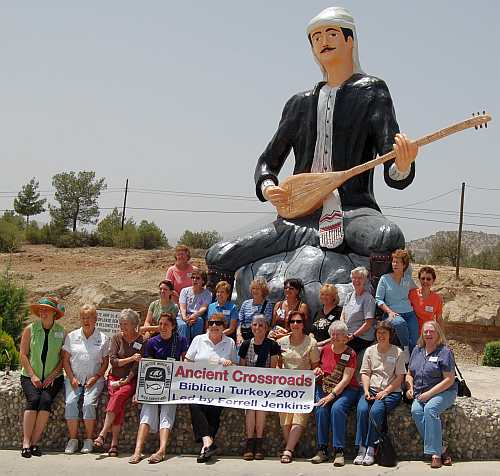
We left Adana and traveled along the beautiful Tuquoise Coast passing Mersin, Pompeipolis, Corycos and Silifke. The Mediterrenean coast is the real fruit bowl of Turkey. At Silifke we headed north and drove through another of the important passes in the Taurus Mountain highest point was about 5000 feet above sea level. We saw some Cedars of Lebanon growing in the area. That is about the same altitude of the great Cedars in Lebanon. Near Karaman we stopped for a lunch break. The ladies of the group posed under an image of one of Turkey’s famous folk musicians from the area.

The Ancient Crossroads Women near Karaman, Turkey. Photo by Ferrell Jenkins.

We visited the tell of Derbe (Kerti Huyuk; Acts 14:20-21; 16:1; 20:4). We made a short stop at the Museum in Karaman to see one of the inscriptions which helped to identify the site of Derbe. After that we headed for the mound of Lystra (Zordula) of Lycaonia near the village of Hatunsaray. It was here that the priest of Zeus wanted to offer a sacrifice to Paul and Barnabas (Acts 14:6-20). This was the home of Lois, Eunice, and young Timothy (Acts 16:1-4). These cities were in the province of Galatia (Gal. 1:2) in New Testament times. Both Derbe and Lystra await the archaeological spade.

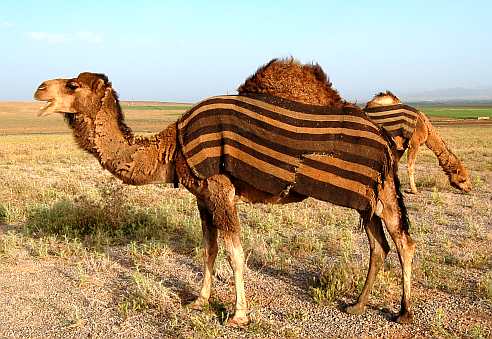
Along the way we saw a large flock of goats (several hundred) and some camels grazing in a field. The nomad family, consisting of a mother and three or four girls, had brought the animals from the Coast over a two month period. The young lady watching the camels did not know her age. She might have been between 14 and 16 told our guide they would go back “when the first snow flakes fall.” This was a good reminder of Patriarchal days of the Bible.

Migratng camels with nomads near ancient Lystra in Turkey. Photo by Ferrell Jenkins.

Thursday we plan to visit the archaeological museum in Iconium (Konya) and Pisidian Antioch before heading for Antalya (Attalia of the New Testament).

Wednesday Evening in Konya — Biblical Iconium

We have had a busy, wonderful day. It is getting late and I probably will not be able to get the photos posted tonight. Everyone in the group is doing well and enjoying the historical, cultural, and biblical things we are seeing. Check in again tomorrow.

Antioch of Syria — Now in Turkey

We made a full day excursion to Antakya (biblical Antioch of Syria). Turning south along the Mediterranean we passed the plain of Issus where the armies of Alexander and Darius fought in 333 B.C. Further south we passed Iskenderun (Turkish word for Alexandria) which was founded by Alexander the Great. It was along this land bridge that many ancient powers, Hittities, Macedonian, Romans, and Crusaders, made their way to ancient Canaan (Israel, Palestine). Antioch of Syria on the Orontes River was founded by Seleucus I Nicator in 300 B.C. Antioch became a Roman city in 64 B.C. and capital of the new province of Syria. It became the third largest city of the Roman Empire after Rome and Alexandria. After Jerusalem, Antioch was the second great center of Christianity in New Testament times and where the disciples of Christ were first called Christians (Acts 11:19-30; 13:1-3; 14:26-28; 15:1-41; 18:22-23; Gal. 2). A church called the Cave Church of St. Peter honors Peter’s visit to the city (Gal. 2).. From here the great journeys of Paul began. This photo shows part of the modern city from Mount Silpius.

Antioch of Syria (now in Turkey) from Mount Silpius. Photo by Ferrell Jenkins.

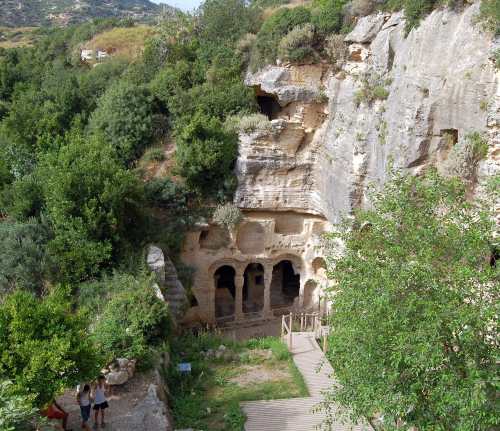
The museum has a fine collection of 4th century A.D. mosaics from nearby Daphne. After lunch we visited the site of the port of Seleucia (near Samandag) which was founded by Seleucus I Nicator in 300 B.C. and served as the seaport of Antioch. From here Barnabas and Saul sailed for Cyprus (Acts 13:4). We saw the tunnel built by the Roman emperors Vespasian and Titus to control flooding in the area. The photo below is of the Besikil Cave, a rock cut tomb monument dating to as early as the first century A.D.

Besikil Cave Monument at Seleucia. Photo by Ferrell Jenkins.

Tomorrow we visit Derbe, Lystra, and Iconium (modern Konya).