
Monday we left Jerusalem and drove to Beersheba. I was able to get some great photos of agricultural practices in the hill country of Judea. The Negev (southland in some English versions) begins at Beersheba. It is an area plagued by lack of water, always dependent on the amount of rain it receives in the winter months. (I am speaking primarily of biblical times, but even with irrigation the area is still fairly barren.). The account of Hagar and Ishmael is illustrative of the conditions in the area (Genesis 21:8-21)
We stopped at Tel Be’er Sheva. The Genesis account says,
Abraham planted a tamarisk tree in Beersheba and called there on the name of the LORD, the Everlasting God. (Genesis 21:33).
There is a nice observation tower on the mound that allows one to get a view of the complete excavated area. The photo also shows the terrain. The highway in the distance is the main highway from Beersheva to Eilat.
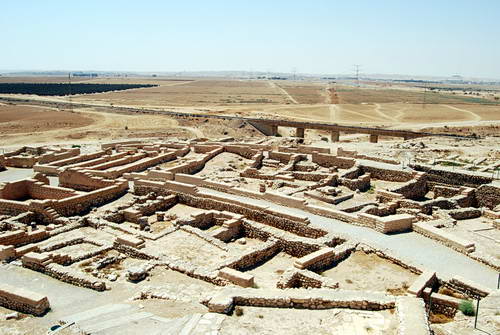
View of Excavation at Tel Beersheva
We saw so much yesterday that it would take me hours to write a summary. We stopped at Wadi Zin and the Wilderness of Zin where the Israelites wandered. See Numbers 13:21 and 20:1. Since I am not too fond of Manna, I think a few days would be enough for me! By 8 p.m. we arrived at Eilat.
Sunday we visited with some Christian friends who live north of Tel Aviv. Ken and Vickie Boyd are here for two years in connection with Ken’s job. We met with them for worship. Vickie prepared a wonderful lunch that was far superior to the hotel buffets we had been eating. The Boyd’s were students of mine in the ancient days. We wish them well in their time in Israel.
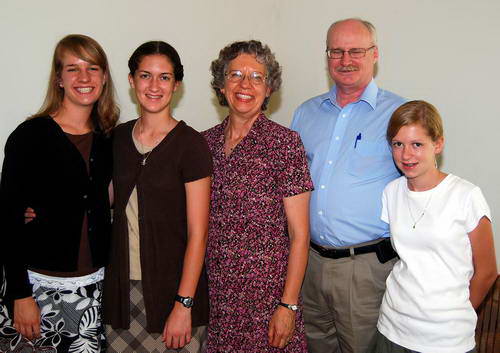
Jessica, Savanah, Vickie, Ken, Heather
In the afternoon we stopped at Aphek for a few photos. In New Testament times this was known as Antipatris. More later, perhaps. We also went to Gezer, but were to late to do a complete visit or to get good photos.
 Ferrell's Travel Blog
You must be logged in to post a comment.